Why an edge goes, and how to bring it back
A knife that suddenly needs pressing is usually not blunt. The edge has rolled over to one side, and twenty seconds on a rod puts it back. Here is how to tell which of three things yours needs.
You press into a tomato and the skin bunches under the edge. The blade slides sideways. You add a little force, and the tomato bursts from the side while the top stays uncut. It was gliding a month ago. Now dinner is fighting back.
Rolled, not blunt, and how to tell the difference
Most knives that feel blunt are not blunt. What has changed is not the wedge of steel, it is the last hairline at the very edge, and that line can lean over to one side under ordinary use. The steel is still thin and still capable. It is simply no longer pointed where you think it is. That is a rolled edge, and it steers the cut sideways, snags on skins and makes you push.
Two checks tell you which you have, and neither needs equipment. Hold the knife under a bright light and rock it slowly. A healthy edge disappears into a shadow line while the bevels either side of it catch the light. A rolled or flattened patch flashes back at you, because there is now a flat surface where there should be none. Then drag your thumb pad lightly across the edge, across it rather than along it. A centred edge feels even in both directions. A rolled one feels smooth one way and grabby the other, because one side carries a tiny lip.
If the knife slices clean newsprint after twenty seconds on a rod, it was rolled. If nothing changes, the bevel itself has worn flat and you need a stone.
Honing is a habit. Sharpening is metalwork. Confusing the two is why people think knives wear out.
Honing: the twenty second reset
Set the rod tip down on a board and hold it steady, or hold it out in front of you at a comfortable angle. The pose does not matter as much as consistency. Lay the blade against the rod at a small angle. Fifteen degrees a side is typical of Japanese kitchen knives and around twenty of European ones, and you do not need a protractor to find it: match the bevel the knife already has and do not change your mind halfway through.
Draw the whole length of the blade across the rod, heel to tip, leading with the edge, then swap sides. Ten alternating strokes with light pressure is plenty. You are not grinding anything. You are coaxing a wire back upright. Wipe the blade before it goes anywhere near food, because whatever came off the edge is now on the steel.
What each tool actually removes
| What you do | How often | What it removes | What it is for |
|---|---|---|---|
| Honing rod | Every few uses | Almost no metal | Straightening an edge that has rolled to one side |
| Whetstone | Two or three times a year | A controlled amount, under your own hand | Rebuilding the bevel when the edge has genuinely worn flat |
| Pull-through carbide | Sparingly, as a fast reset | More metal than anything else on this list | Keeping a stainless set usable when nobody is going to use a stone |
| Strop | After a stone, or between uses | Traces of metal and the leftover burr | Refining and polishing an edge that is already sharp |
| Sharpening service | When something is chipped | Whatever the damage requires | Repairs and reprofiling you would rather not attempt |
The stone session, twice a year
Lay the stone on something that will not slide and clear the space around it. Some stones want a soak and some want a splash, and the maker will tell you which. Set the blade on at your working angle, lock your wrist so the angle lives in your shoulder rather than your fingers, and use the fingers of the other hand flat on the blade to keep the pressure even from heel to tip.
Work one side until you can feel a burr along the full length of the edge. The burr is a fine wire of metal pushed over to the far side when the two planes finally meet, and feeling it appear is the only reliable sign that you have actually reached the edge rather than polishing the shoulder above it. Then turn the knife over and do the same on the other side, and finish with a few very light alternating passes to take the wire off.
Where a pull-through belongs, and where it does not
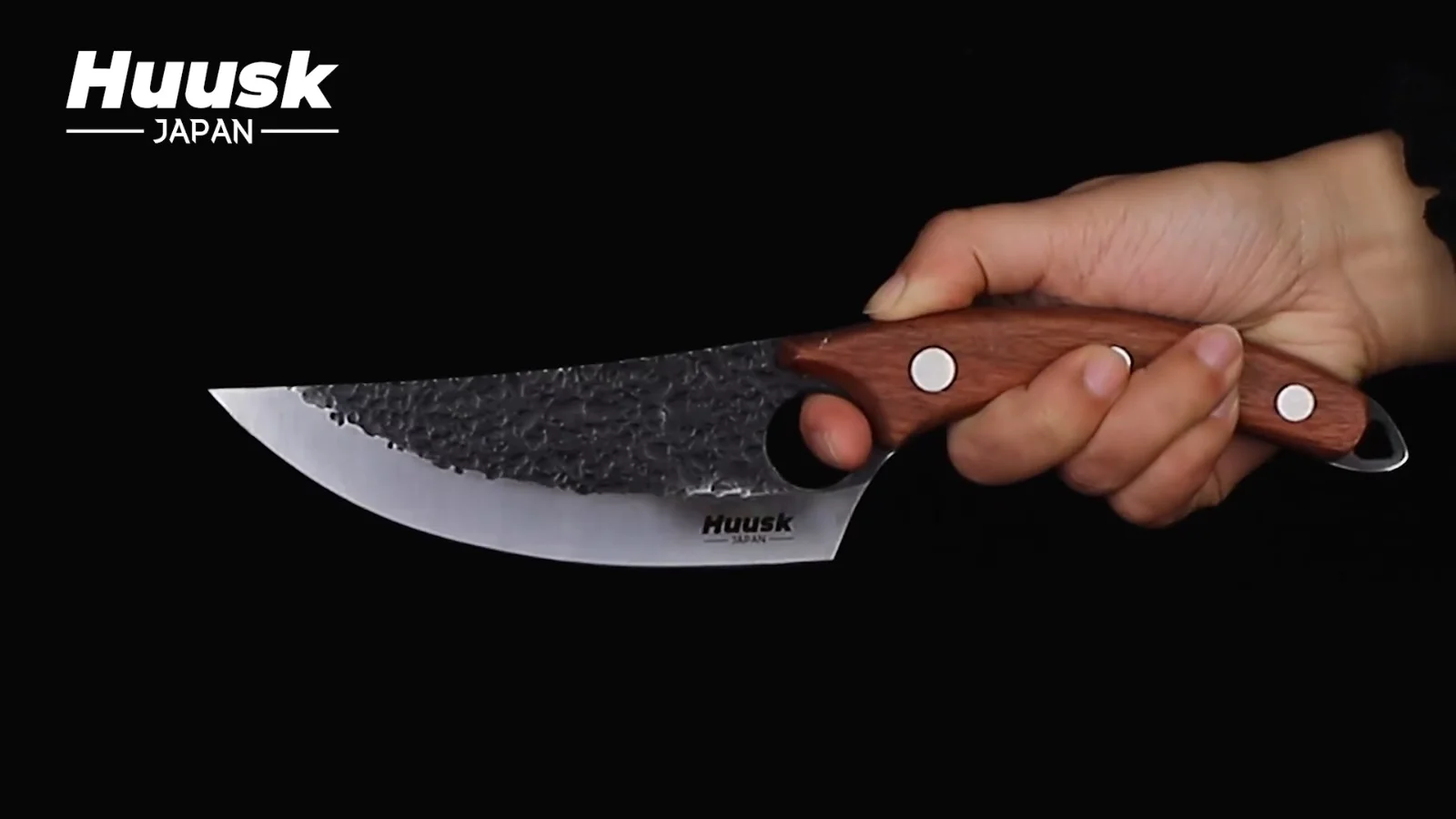
A plain stainless knife that gets heavy use and occasionally goes through a dishwasher will be fine with a carbide reset now and then. The slot drags the edge between two hardened wheels and takes off a visible amount of steel, and for a knife you were never going to sharpen properly that is a good trade.
It is a bad trade for a hard blade. A VG-10 core or an ATS-34 blade takes a keener finish and holds it longer, and it also chips sooner if it is twisted or asked to go through bone. A fast abrasive slot does not respect that geometry. Several of the boxes on our sets, blocks and storage shelf carry exactly this mechanism built into the block, which keeps the stainless pieces honest and is the wrong home for a forged carbon chef knife. Keep that one in a sheath or on a magnetic bar and give it the rod instead.
Rust, patina, and the thirty second habit
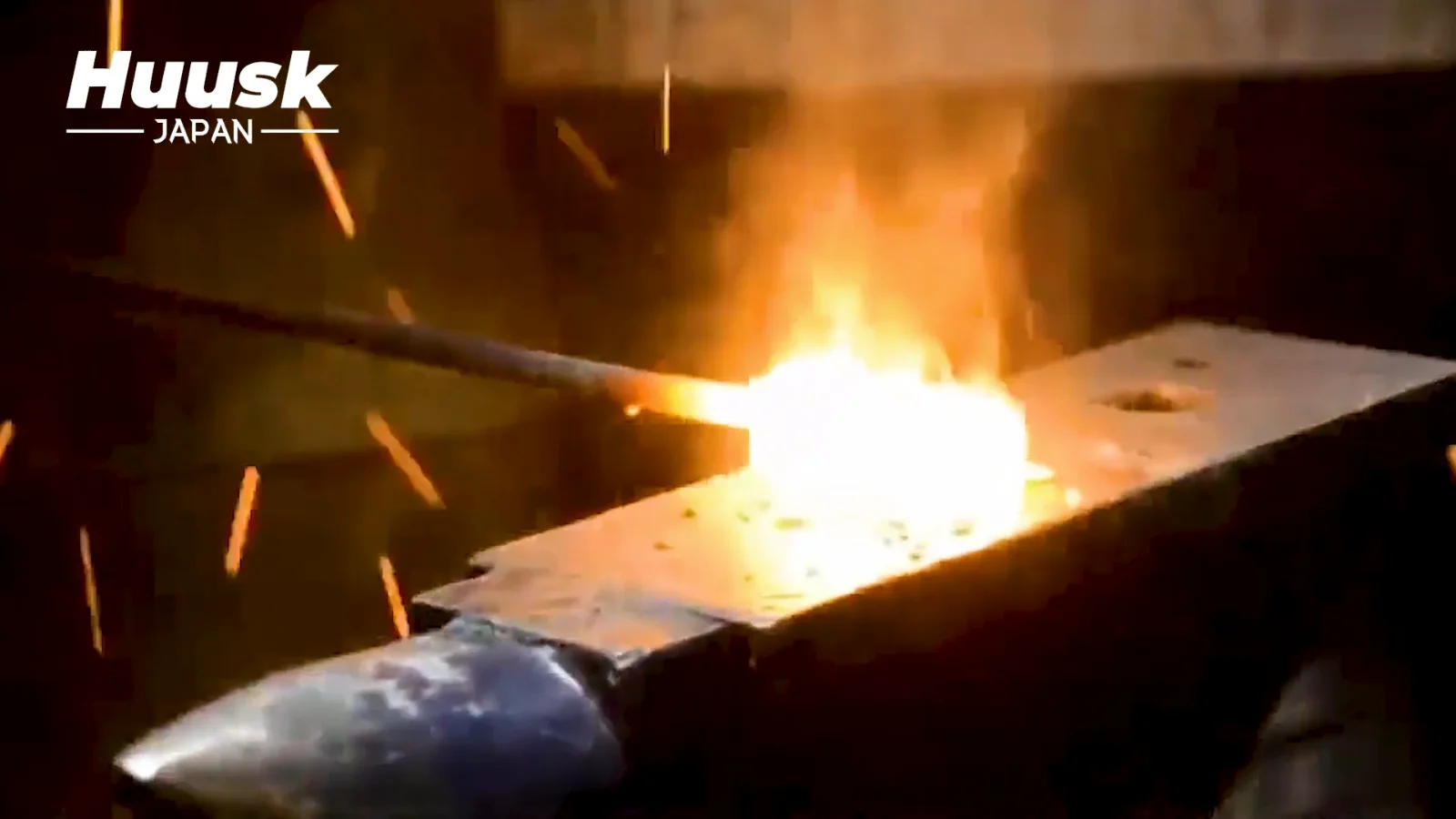
High carbon steel reacts with water and with acid, and that is part of the same property that lets it take a finer edge. The surface goes grey over time, bluish after meat, darker after onions, clouded after citrus. That is a patina rather than a fault, and once it settles it protects the steel underneath.
Rust is different and entirely preventable. Wash the blade, dry it with a towel, put it away. That is the whole routine, and it takes about as long as reading this sentence. A knife going into storage for a season wants one more step, a thin film of cooking oil wiped along the blade, which keeps moisture off the steel while it sits. Owners of our hand forged blades say the same thing in their own words: the drying is the deal you make when you buy carbon steel.
Chips are a different problem
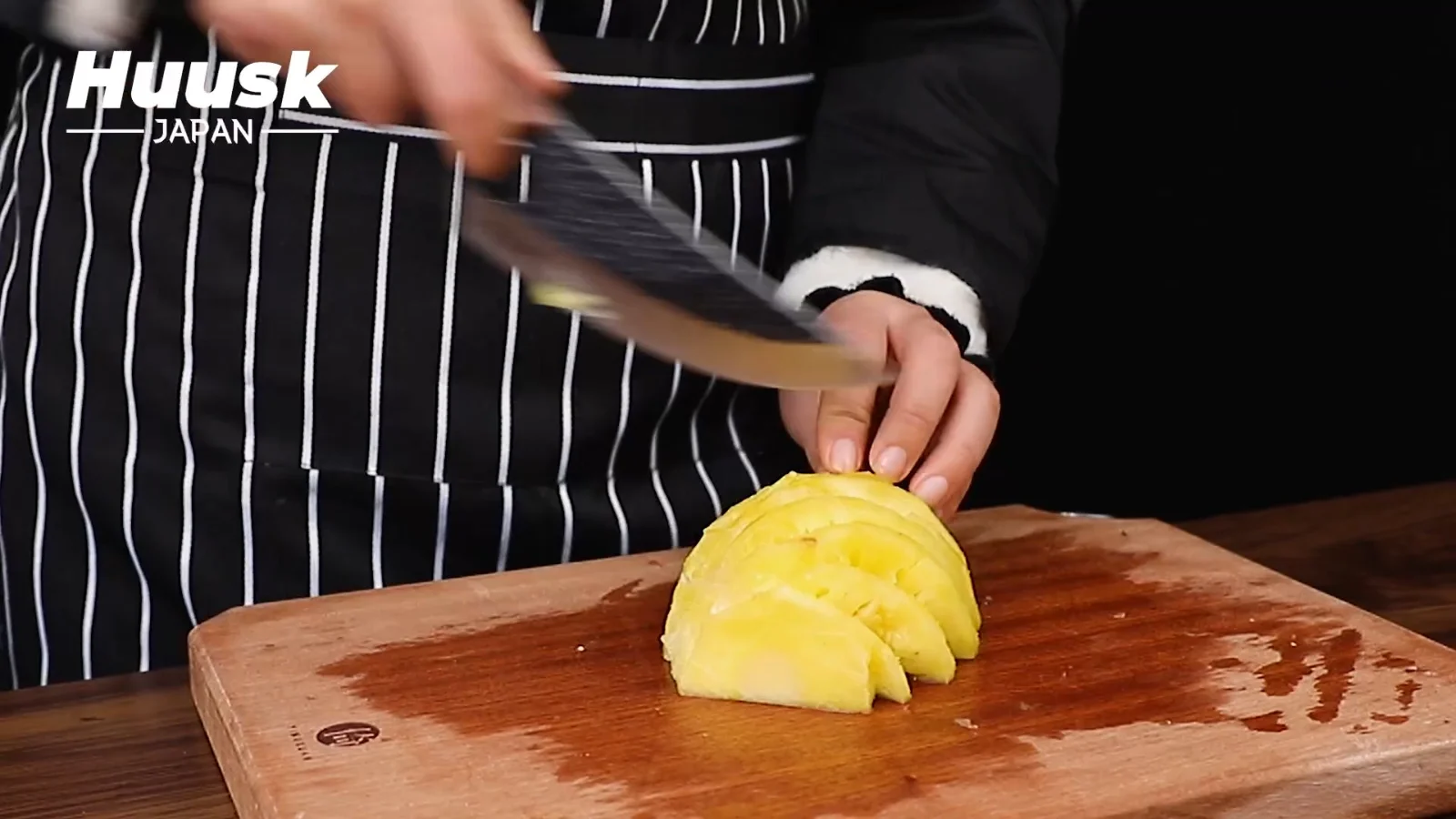
A rod straightens a rolled edge. It cannot replace metal that has broken off. If you see tiny white dashes glinting along the edge under a light, or the blade catches on a towel as you dry it, you have micro chips, and honing will do nothing about them.
Small chips come out on a stone with patience. Deep ones are worth handing to somebody with a belt and a jig, because chasing a nick down by hand takes far more metal off the whole edge than the damage itself did. What causes them is almost always storage or bone. A forged edge loose in a drawer meets a spoon and loses. Sixty-nine of the knives on this site ship with a sheath for that reason, and the card says which.
How often, in practice
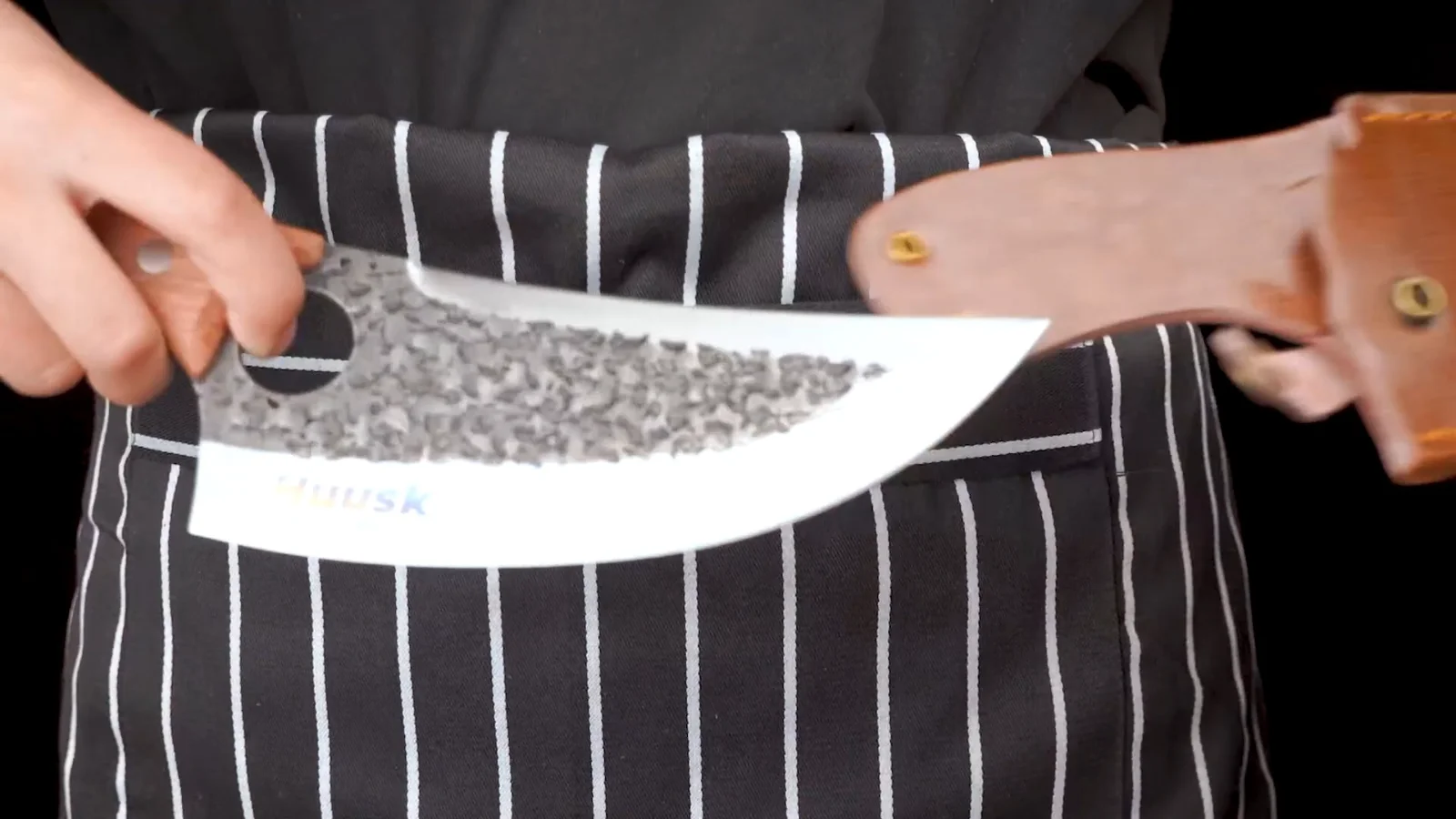
The honest answer depends on what you cut and on nothing else. A household that cooks four nights a week on wood, mostly vegetables and boneless meat, wants the rod every three or four sessions and a stone twice a year. A household that jointing chickens every weekend wants the rod after each of those sessions, because bone and cartilage roll an edge faster than anything else in a kitchen.
Two habits move that schedule more than the steel does. The first is the board: glass and stone take an edge off in a fortnight regardless of what you paid for the knife. The second is what the blade does between jobs. A knife laid on a counter and picked up again keeps its edge; a knife tossed into a drawer with a serving spoon does not. Neither habit costs anything, and together they are worth more than moving up a grade of steel.
If you keep one figure in your head, make it this one. A rod takes twenty seconds and you should reach for it more often than feels necessary. A stone takes twenty minutes and you should reach for it less often than you think.
What a hardness number is worth
Sharpness has a written test. Part 5 of ISO 8442, the international standard family for cutlery in contact with food, draws a blade against a card strip under a counterbalanced load and measures how much card is cut, and edge retention is that same test repeated over a stated length. The International Organization for Standardization even publishes an annex for calibrating the rig. None of that happens in a kitchen, but it is worth knowing that sharpness is a measurement and not an adjective.
Hardness is measured with the Rockwell test, and ASTM International publishes the method as ASTM E18. The standard says two useful things at once: that following it gives traceability to national hardness standards, and that a reading taken at one location on a part may not represent the whole part. That is why a single figure stamped on a box is weaker evidence than it looks, and why there is not one printed anywhere on this site.
It is also why two knives out of the same drawer feel different after a month. Different steels, different angles, different boards and different hands leave different edges behind. If you want to know what we do and do not publish about our own figures, that is set out in how this catalogue is kept.
The four things that dull a knife between sharpenings
The dishwasher, first, and for four separate reasons: abrasive detergent, the rack knocking the edge against other steel, the heat of the drying cycle, and water baked into the join between tang and handle. Wash by hand and the argument ends.
Then the board, which does more damage than any amount of cutting. Glass, stone and ceramic are all harder than knife steel and take an edge off in a fortnight, and that is the subject of the board under the knife. Then bone, which chips a thin edge no matter how good it is, and which is what the cleavers exist for. And last, using the wrong knife: forcing a paring blade through a squash loads the edge sideways, which is the one direction it has no strength in. If you are not sure which knife should be doing what, which knife does the work sorts that out, and the shapes themselves sit on our chef and santoku knives shelf.
Tonight
Rock the blade under a light. If the edge flashes back at you in places, hone it and try the tomato again. If it slices, you are done and you now know to touch the rod every few uses instead of once a season. If honing changes nothing, put the knife aside for jobs that do not need finesse and book a stone session this week. If you can see chips, skip the rod altogether.
One button, the whole Huusk range
Every blade length, steel and piece count in the Huusk collection sits behind this button, with the current price beside it. Pick the job, check the blade against the board you own, and it ships from our retail partner.