The three knives that do ninety per cent of the work
Most kitchens own eight knives and use two. Here is which two, at what blade length, and why the board you already own decides the answer before the steel does.
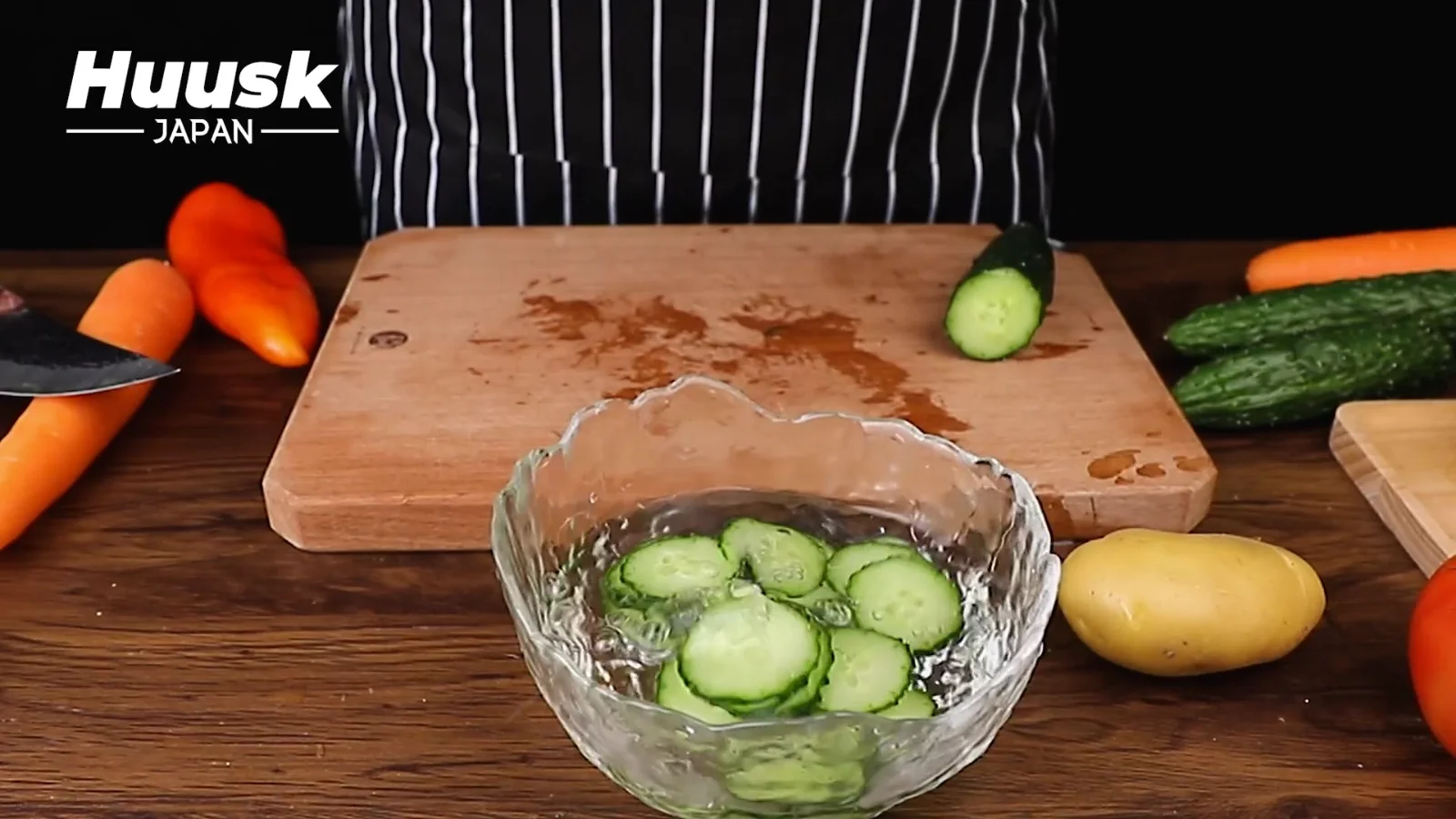
You set a board on the counter, pull a knife out of a mixed drawer and start on an onion. The heel stalls, skids, then bites. You rock, then chop straight down. Your hand creeps forward until you are pinching the blade without having decided to. Halfway through you go back to the drawer for a different shape. Dinner still gets made. What a better knife changes is not drama, it is rhythm.
Most kitchens own eight knives and use two. This is about which two, at what length, and in what order to buy them.
The two knives that cover almost everything
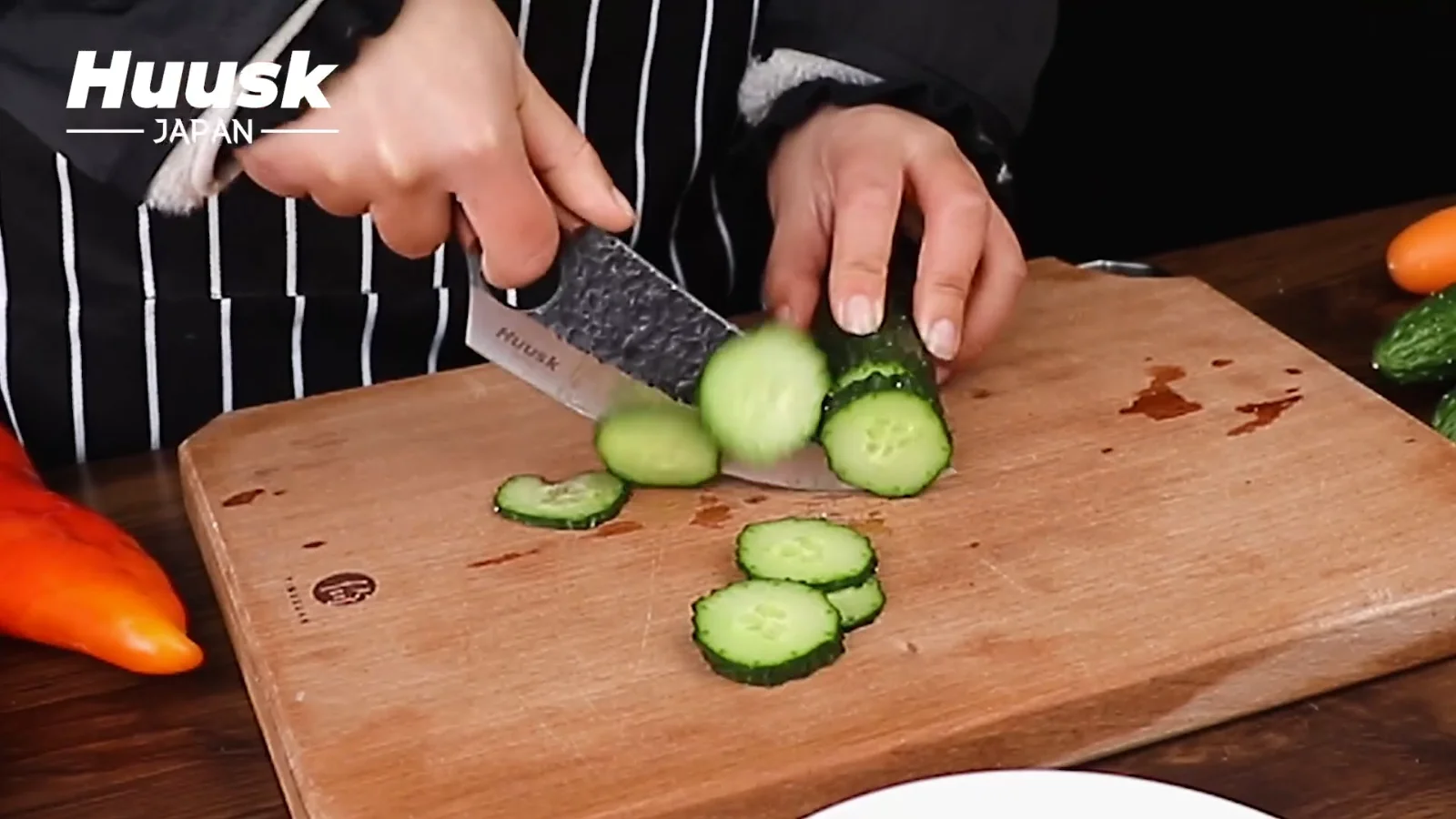
The first is a chef blade, seven or eight inches, in whichever of the Japanese shapes suits your hand. It does the onions, the herbs, the chicken breast, the squash and the eighty per cent of prep that has no name. The second is a paring knife, under three and a half inches, for the work you do holding the food rather than laying it down. Hulling, coring, peeling, taking the string off a parcel.
A third knife is a real purchase rather than an afterthought, and which one it should be depends entirely on what your week contains. If you break down whole chickens, it is a cleaver or a Serbian blade. If you smoke or roast, it is a long slicer. If you fillet fish, it is a boning knife. If none of those describe you, buy two good knives and stop, and spend the third knife’s money on a board that does not slide.
Buy for the week you cook, not for the week you imagine.
Before you buy anything, try the drawer
Half the knives people replace are not worn out. The edge has rolled over to one side under ordinary use, which makes the blade steer and slide and feel blunt, and twenty seconds on a honing rod puts it straight again. It costs nothing to find out: hold the knife under a bright light and rock it slowly, and if the edge flashes back at you in places rather than disappearing into a shadow, that is a rolled edge and not a dead one.
This matters here because it changes what you are shopping for. If your current chef knife comes back after a hone, you do not need a new chef knife, you need a rod and five minutes a month, and the money is better spent on the second or third knife you genuinely do not own. If it comes back after a stone and then goes again within a fortnight, the steel is soft and no amount of technique will fix that. That is the knife worth replacing, and the whole of how we keep an edge is about telling those two cases apart.
Gyuto or santoku: your hand has already decided
Watch yourself for one minute at a board. You cut in one of two motions. Either the tip stays down and you lift and drop the heel through the food in a curve, which is rocking, or you lift the whole blade and press it straight down, which is a push cut. Almost nobody does both deliberately.
A gyuto is built for rocking. It has a curved belly that keeps contact through the arc and a pointed tip for the fine work, scoring skin or taking the core out of a pepper. A santoku is built for pressing. Its edge is flatter, so the whole length meets the board at once and nothing gets crushed at the end of the stroke, and its heel is taller, which keeps your knuckles clear. The dropped tip is the trade: less detail work, more usable edge. Both are on our chef and santoku knives shelf, and neither is better. One of them matches what your arm already does.
The board decides the length before the steel does
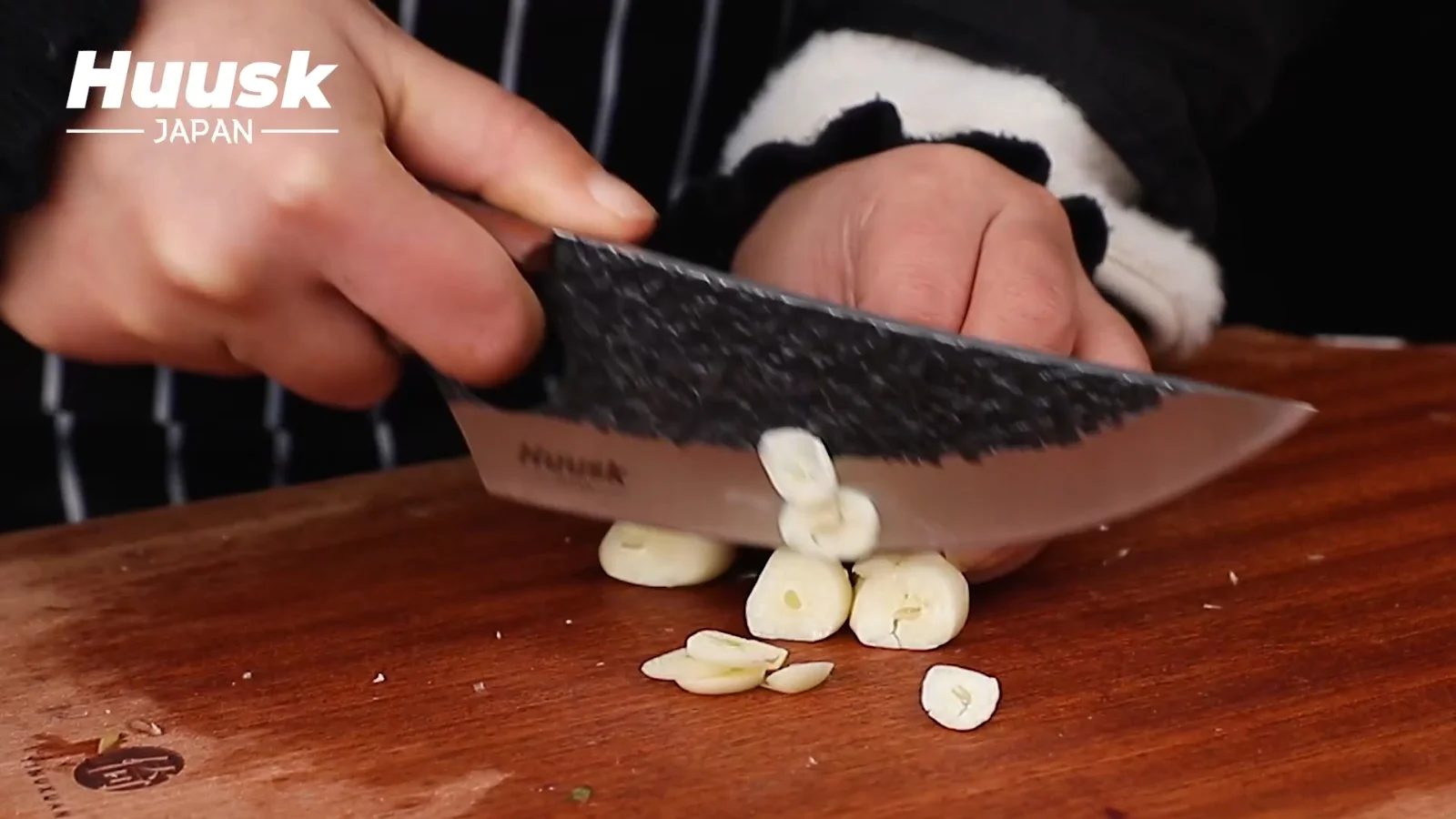
Lay a tape across the board in daily use, not the one at the back of the cupboard. A blade longer than about two thirds of that board has nowhere to travel, so you end up cutting at an angle to the food and pushing the last inch through. On a twelve inch board a seven inch knife is right. On fifteen inches an eight or nine opens up. Below six inches you have a utility knife with a chef knife’s name on it.
Grip shifts that by half an inch either way. If you hold the handle, your hand sits further back and a seven feels like an eight. If you pinch the blade in front of the bolster, your fingers move forward and an eight feels like a seven. A pinch grip also wants a flat spine you can rest a finger on and a tang you can feel through the scales. A handle grip is happier on a rounded composite. Neither is more correct, and you will not change yours by reading about it.
When the forged blade replaces the chef knife
The blade Huusk is best known for is not a chef knife and not a cleaver. It is short, tall and heavy, with a finger hole through the heel, and it is the one knife on this site that people arrive looking for by name. What it does that a chef knife cannot is go through a chicken back without chipping, and then keep working on the board afterwards instead of being put down.
That makes it the right first knife for one sort of cook: somebody who buys whole birds, cooks a lot of meat, and does not want two knives on the counter. It is the wrong first knife for anyone whose week is mostly vegetables, because the weight that helps through a joint is weight your wrist carries through a pile of parsley. The whole line sits on our hand forged blades shelf, and the finger hole is the feature people mention first when they write about it.
The second knife is smaller than most people expect
A paring knife is the cheapest thing in this catalogue and the one owners say they pick up most. Three and a half inches is the size to buy if you are buying one. Two point seven is for detail work and small hands. Five and five and a half inches are utility blades that have wandered up from this shelf and will handle a large tomato or a sandwich loaf, at the cost of being clumsy for peeling.
There is a second shape here worth knowing about. A bird’s beak paring knife has an edge that curves inward, so it follows the round of an apple or a shallot as you turn the food against it instead of fighting the curve. It is close to useless flat on a board and very good in the air. Both shapes live on the paring and utility knives shelf, and buying one of each costs less than most single chef knives.
The third knife, and how to know which one it is
A slicer is long for one reason. A slice should come off in a single pull, and sawing at a brisket with an eight inch blade is what produces the ragged edge and the shredded corner. Ten to twelve inches removes the reset in the middle of the stroke. Some carry a granton edge, the row of oval scallops ground into the flat, which breaks the suction between a wet slice and the steel so the slice falls away instead of clinging to it.
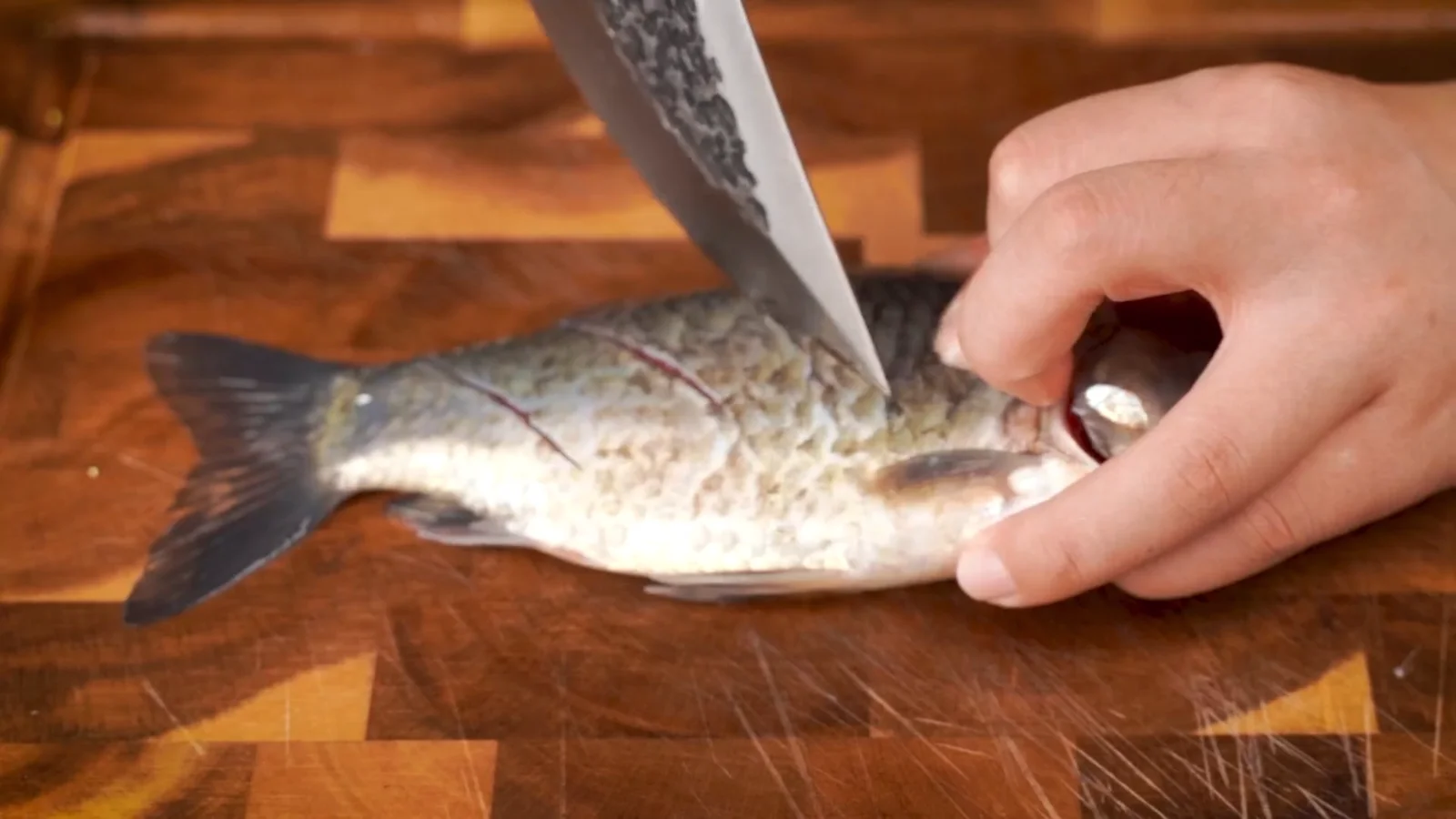
A boning knife is the opposite sort of tool. Six inches, narrow, and its job is to follow a shape rather than cut a line. Curved rides around a joint and takes thighs off a chicken. Straight trims a brisket flat and takes silverskin off a loin. Stiff for beef and pork where you lever against bone, flexible for fish and poultry where you ride along it. Our boning and fillet knives shelf prints the shape on every card, because the two are not interchangeable and the photograph will not tell you which is which.
Every shape, and what each one does badly
Knife shapes are usually sold on what they are good at. The more useful column is the last one.
| Shape | What it is for | Blade length | What it does badly |
|---|---|---|---|
| Gyuto | Daily prep with a rocking stroke, plus detail work at the tip | 7 to 9 inches | Straight push cuts, where the curve lifts part of the edge off the board |
| Santoku | Daily prep with a straight push cut, tall heel for knuckle clearance | 7 to 8 inches | Anything that needs a point: scoring, coring, trimming |
| Nakiri | Vegetables, chopped straight down with the whole edge landing at once | 7 inches | Meat, and every job that starts with a tip |
| Serbian forged blade | Taking a joint apart and then working on the board | 6 to 8 inches | Fine slicing, and long sessions if your wrist is tired |
| Cleaver | Falling through chicken backs, ribs and small bones | 3.5 to 8.3 inches | Parting a tomato: the grind pushes rather than slices |
| Boning knife | Following a bone or a seam, curved or straight | 6 inches | Board work, and anything that loads the tip sideways |
| Paring knife | Peeling, coring and hulling in the hand | 2.7 to 3.5 inches | Anything on a board that is bigger than a shallot |
| Slicing knife | One long pull down a brisket or a roast | 10 to 12 inches | Onions, and every job on a small board |
Steel matters less than the question underneath it
Our cards name the steel wherever our product data does: Damascus pattern, a VG-10 core, ATS-34, high carbon, plain stainless, Japanese steel. Those names are worth reading, and they are not the first decision. The first decision is whether anybody in your house will dry a knife.
High carbon steel takes the keenest edge in this catalogue and holds it longest, and it will show a grey shadow if an onion sits on it overnight. The routine that prevents that is thirty seconds long. Plain stainless gives up its edge sooner and does not care what you do to it. If knives in your kitchen get left in the rack, buy stainless and be content, because a rusted blade you resent is worse than a plain one you use every day. What happens after that is covered in how we keep an edge, and the surface you cut on matters as much as either, which is the board under the knife.
What to buy, in order
One chef blade, sized to your board and chosen by the motion your arm already makes. One paring knife at three and a half inches. Then nothing for a while, until your own cooking tells you what the third should be.
If you find yourself sawing at a roast most Sundays, that is the slicer. If you keep meeting bone, that is the cleaver or the Serbian blade. If you buy whole fish, that is a boning knife. If your third knife never announces itself, you did not need one, and the money was better spent on a board and a rod.
One button, the whole Huusk range
Every blade length, steel and piece count in the Huusk selection sits behind this button, with the current price beside it. Pick the job, check the blade against the board you own, and it ships from our retail partner.