The board under the knife
A glass board will take the edge off a good knife in a fortnight, and a scarred plastic one is a food safety problem rather than a cutting one. What to buy, what to throw away, and what federal guidance actually asks for.
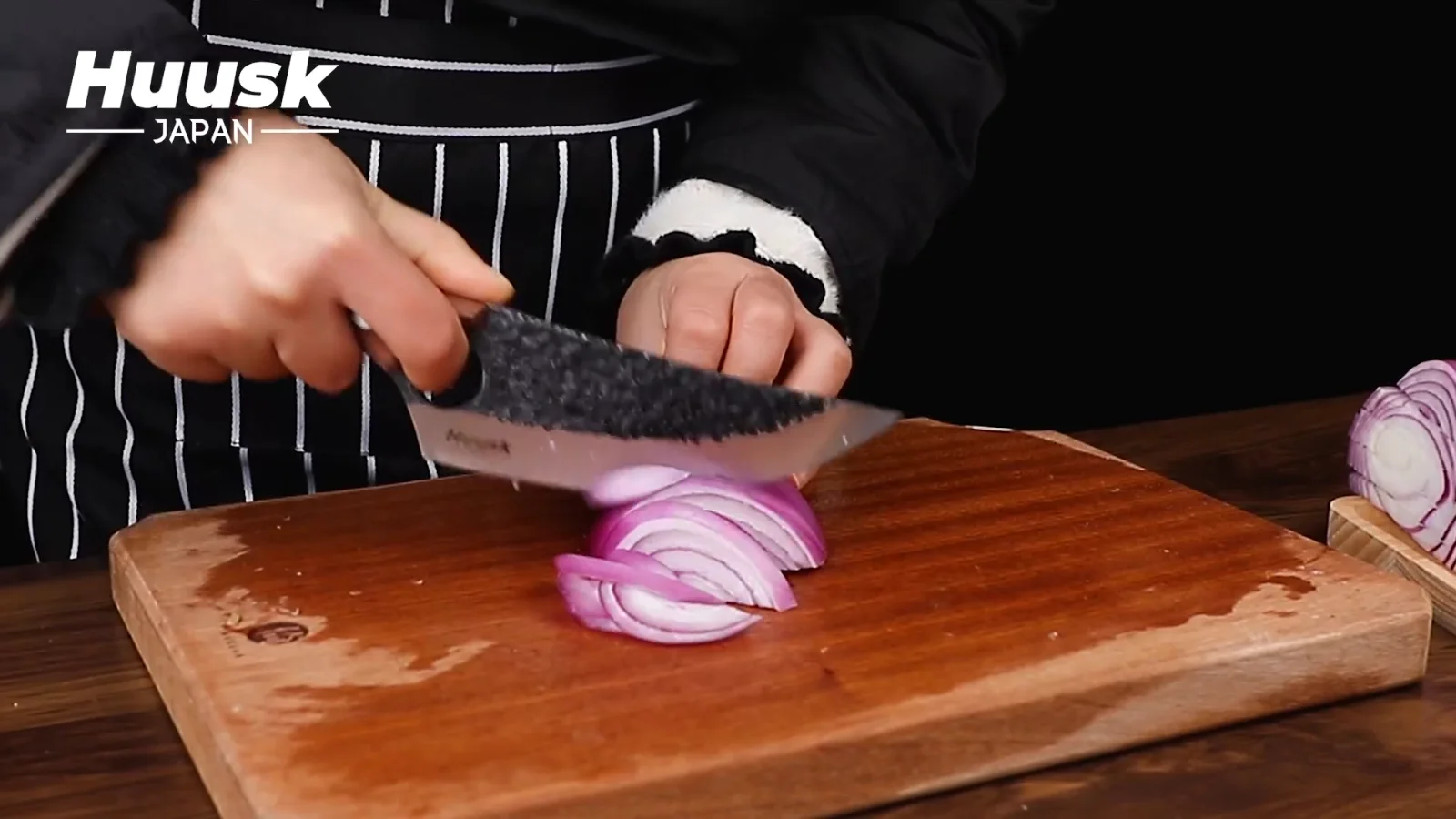
The sound tells you first. A bright clink as the edge taps the plate you left on the counter. A ring as it skates across glass. A dry scrape on a bit of plastic that has been cut on four hundred times. A new knife makes a different noise on every surface in your kitchen, and the noise is information.
The board is doing more damage than the cutting
Every stroke you make ends at the board, and what happens in that last half millimetre decides how long the edge lasts. On a soft surface the edge sinks a hair into the fibres and stops. On a hard one it stops dead, and the very tip of the steel is the part that gives way.
The ranking is not a matter of opinion. Glass, stone, ceramic and a steel counter are all harder than knife steel, and they will take an edge off a good blade inside a fortnight and chip it if you are unlucky. End grain wood, edge grain wood, bamboo and plastic are all softer than the blade. That is the whole of the argument, and it applies to every knife in the world, ours included.
A board is a partner to the knife, not a stage it performs on.
What each material does to an edge
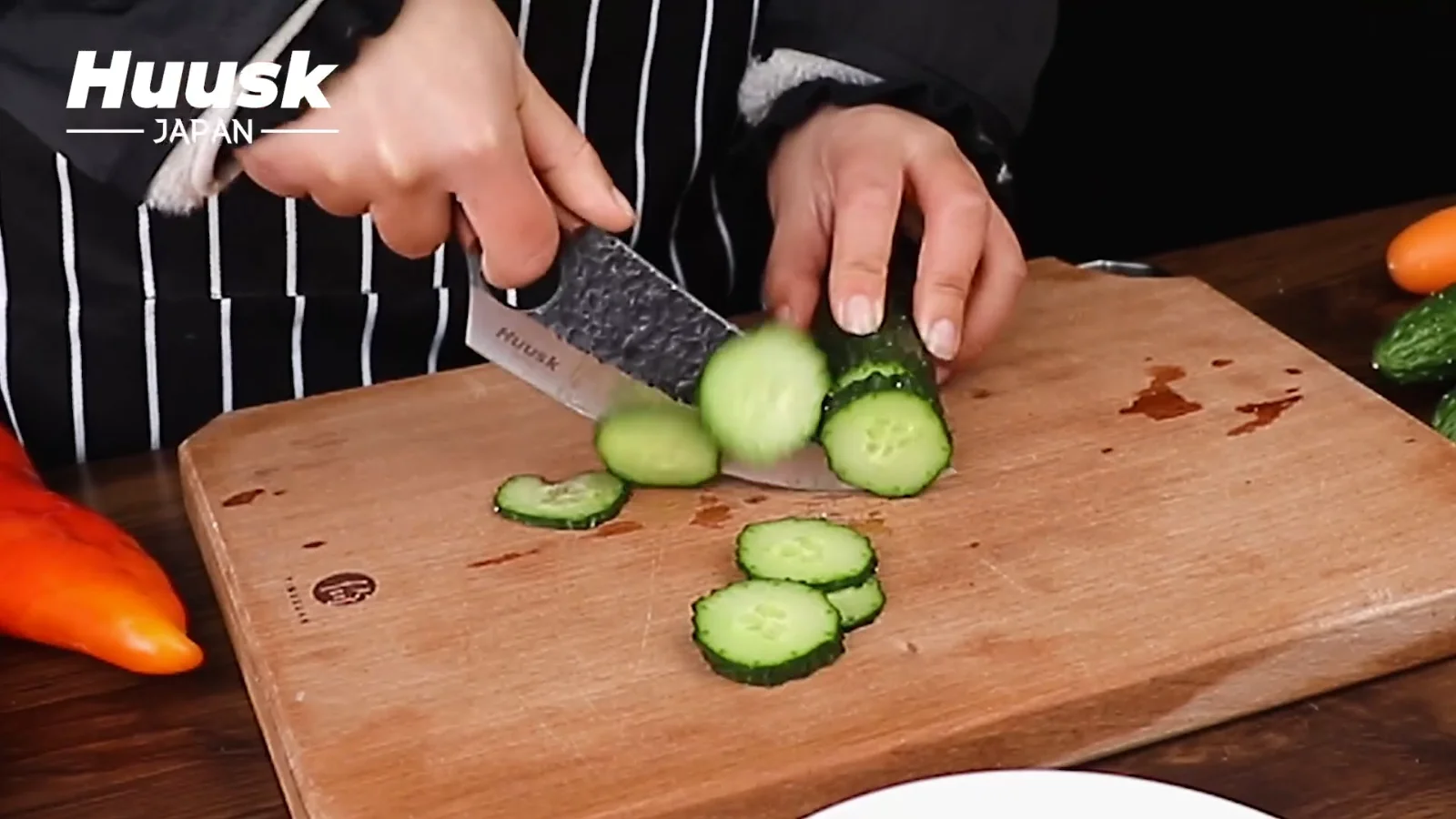
End grain wood is the kindest surface there is, because the fibres stand on end and the edge parts them rather than cutting across them. Edge grain is firmer and cheaper and still nowhere near hard enough to hurt a blade. Bamboo is harder and less porous than hardwood, takes up almost no moisture and resists scarring from knives, which makes it a reasonable compromise. Plastic, usually high density polyethylene, is softer than steel and nonporous, and it scars in a way you can see, which is more useful than it sounds.
| Board material | What it does to the edge | How it washes | When to throw it out |
|---|---|---|---|
| End grain hardwood | Kindest of all: the edge parts standing fibres and stops | Hot soapy water, rinse, air dry or pat dry. Solid wood can go in a dishwasher | When grooves appear that cannot be cleaned |
| Edge grain hardwood | Firmer than end grain, still far softer than the blade | Hot soapy water, rinse, air dry. Oil occasionally | When deep grooves form or the board cups |
| Bamboo | Harder and less porous than hardwood, resists scarring | Hot soapy water, then rub with mineral oil to help it hold moisture | When excessively worn or grooved |
| Plastic (HDPE) | Soft relative to steel and easy on an edge. Scars visibly | Hot soapy water or a dishwasher. Can be sanitised with bleach solution | When cuts become channels you cannot scrub clean |
| Glass or stone | Harder than knife steel: dulls and can chip an edge | Nonporous, easy to clean, dishwasher safe | Retire it from knife work altogether |
| Laminated board | Varies, and the joints are the weak point | Hand wash: a dishwasher may crack and split it | When the layers begin to separate |
One more property matters if your knife is carbon steel, which most of the forged blades on our hand forged blades shelf are. A carbon blade left lying wet on a damp board will stain. It is a reaction rather than a fault, and it is avoided by wiping the blade during prep and drying the board before you put a knife down on it.
Two boards, and why the guidance is firm about it
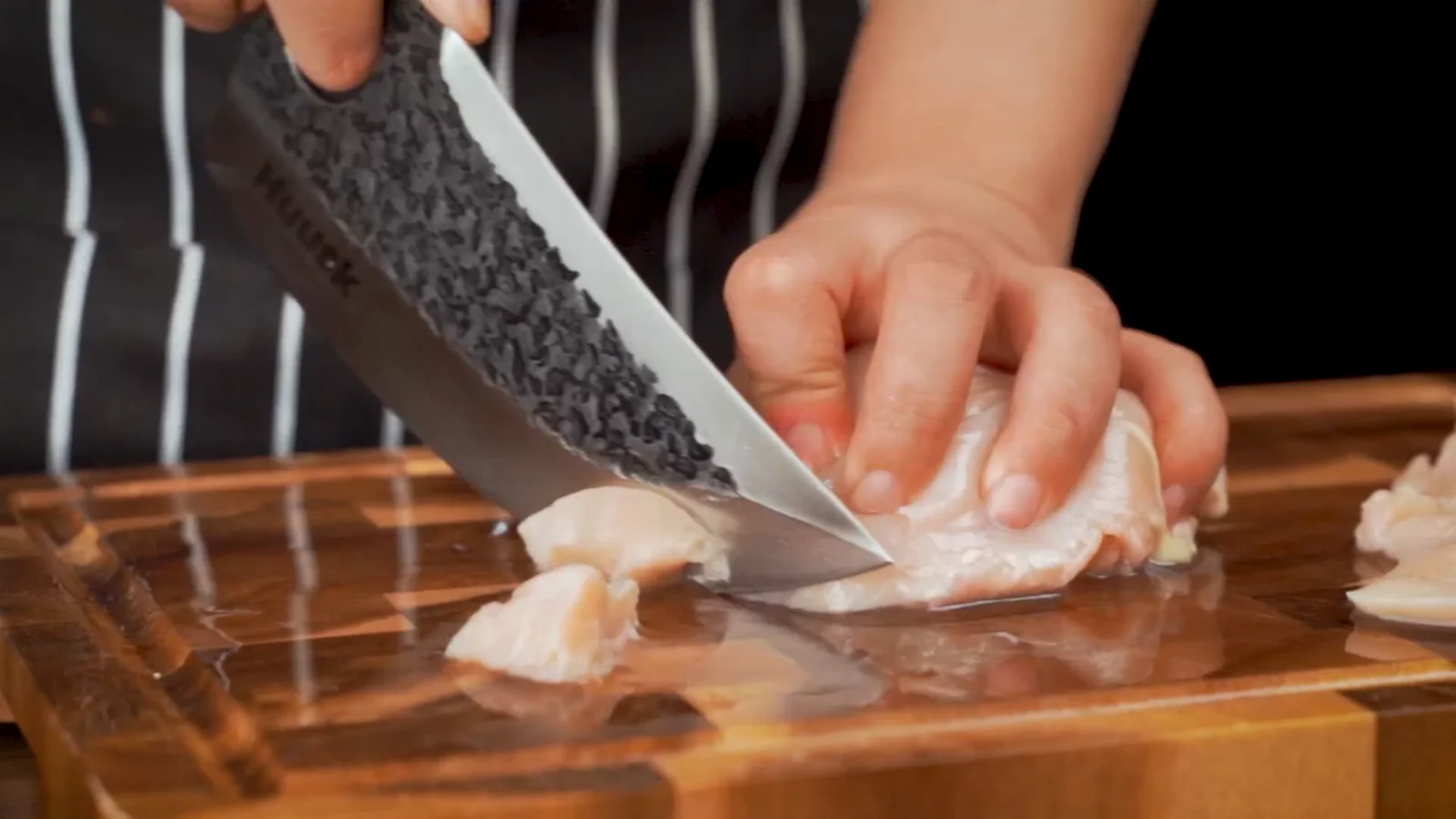
The Food Safety and Inspection Service of the US Department of Agriculture says consumers may use wood or a nonporous surface for raw meat and poultry, and then adds the part people skip: keep one board for fresh produce and bread and a separate one for raw meat, poultry and seafood. Not two materials. Two boards.
The reason is cross contamination, and FoodSafety.gov puts a figure on what is at stake. An estimated one in six Americans gets food poisoning in a year, and 128,000 are hospitalised. The same guidance asks for twenty seconds of plain soap and water on hands after handling raw meat, poultry, seafood or their juices, hot soapy water on boards, dishes, utensils and countertops that have held any of them, and no washing of raw meat or poultry at all, because that spreads droplets around a sink you will touch again.
If you own one scarred plastic board today, the cheapest useful change in your kitchen is to keep it for raw protein and buy a new one for everything else. That is the whole reform, and it costs less than a paring knife.
Washing, and the one sanitising step worth knowing
Hot soapy water after every use, a rinse in clear water, then air dry or pat dry with clean paper towels. Nonporous acrylic, plastic and glass boards and solid wood boards can go in a dishwasher, but laminated ones may crack and split.
When you want to sanitise rather than clean, there is a written recipe: one tablespoon of unscented liquid chlorine bleach per gallon of water, flooded over the surface, left standing several minutes, rinsed with clear water and dried. It works on both wood and plastic. It is worth doing on the raw protein board and not worth doing every night on the one you cut tomatoes on.
Size, thickness, and the juice groove nobody uses
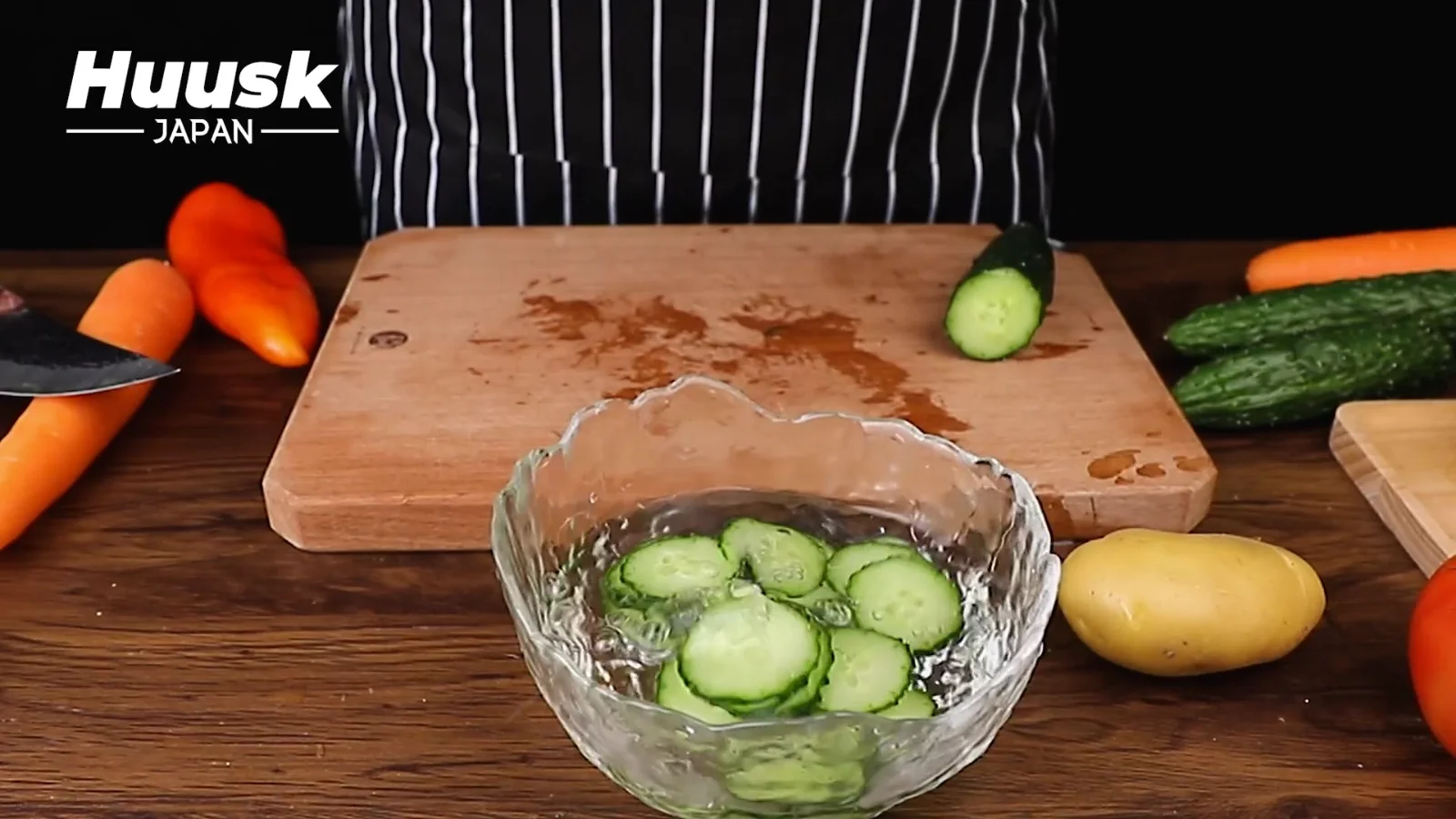
Buy the board that fits the counter rather than the one that fits the knife, because a board you have to lift down and put away is a board you will stop using. Eighteen inches by twelve is the size most household counters take without argument, and it holds a whole chicken with room to work around it. Anything smaller than twelve by nine turns every job into an exercise in pushing trimmings off the edge.
Thickness decides whether the board stays flat and whether you can pick it up one handed. Three quarters of an inch is enough for a board that lives on the counter. Inch and a half or more is a block rather than a board: it will outlast you, it will not warp, and it weighs enough that you will only move it to wash it. A juice groove is worth it if you carve roasts and a nuisance if you do not, because it takes usable area off the surface and collects everything you were going to sweep into a pan.
One more thing to check before you buy: the underside. A board with feet, a rubber rim or a recessed grip will sit still on a wet counter. A flat-bottomed one will not, and the fix is a damp cloth or a thin silicone mat under it every single time.
Oil, and the dishwasher question
Wood boards want oil for the same reason a leather boot does. Dry timber takes up water unevenly, and uneven water is what makes a board cup, split at the seams and eventually rock on the counter. Food grade mineral oil is the ordinary answer, wiped on, left an hour and buffed off, and federal guidance names it specifically for bamboo, which absorbs very little moisture and holds it best when the surface is oiled.
How often is a question the board answers for you. Wipe a drop of water on it: if it beads, the surface is still sealed, and if it soaks straight in, the board is thirsty. New boards want that once a week for a month, then once a month for a year, then whenever the water stops beading.
The dishwasher is where boards die. Nonporous plastic and glass survive it, solid wood tolerates it, and laminated boards crack and split, which is exactly what the federal guidance warns about. The heat is the problem rather than the water: it drives moisture into the timber and then out again in one cycle, and a glued board opens at the joint. Hot soapy water in the sink does the same cleaning job without that.
Where shears beat a knife
A good deal of raw protein work does not belong on a board at all. Cutting a chicken spine out, trimming fat off a chop while you hold it, opening a vacuum pack without stabbing the contents: those are jobs where the food will not lie flat, and a pair of kitchen shears and scissors does them faster and with less mess to clean up afterwards. The pairs that come apart at the pivot are the ones to look for, because the mess collects between the blades where a riveted pair cannot be washed.
A board that moves is its own hazard
A study of national injury data published in the Journal of Emergency Medicine, drawing on the surveillance system of the US Consumer Product Safety Commission, estimated 8,250,914 knife related injuries treated in American emergency departments between 1990 and 2008. That is 434,259 a year, or 1,190 a day. Fingers and thumbs took 66 per cent of them and 94 per cent were lacerations. Where the type of blade was recorded, cooking and kitchen knives accounted for 36 per cent. Children were far more likely than adults to be hurt while playing with a knife, which is an argument about where the block stands rather than about which knife you own.
Almost none of that is about sharpness. A blade that skates because the board moved is the ordinary mechanism, and it is fixed with a damp cloth or a thin silicone mat under the board and a dry counter underneath. Give the knife somewhere to rest between cuts as well, flat on the board rather than balanced on a plate or the sink rim.
Match the board to the knife, not the other way round
Measure the blade you reach for most and give it free travel in both directions. A blade longer than about two thirds of the board has nowhere to go, so you end up cutting at an angle and pressing the last inch through, which is exactly the movement that turns into a slip. Seven inches of knife wants twelve inches of board. Eight or nine wants fifteen. If you are not sure which shape you should be reaching for at all, which knife does the work settles that first, and the shapes themselves are on our chef and santoku knives shelf.
The other half of the division of labour is a narrow blade for the raw board. Taking a chicken apart or skinning a fillet is work that follows a shape rather than cutting a line, and the boning and fillet knives shelf exists for exactly that. Two knives, two boards, and the chef knife stays on the clean one.
When to throw a board away
The federal guidance is direct: once a board becomes excessively worn or develops grooves that are hard to clean, it should be discarded. That is a cleanliness test rather than an appearance test, and it is easy to run. Take the board to a bright light after a wash. If there are dark lines in the cuts that a scrub in hot soapy water will not lift, those grooves are holding something. If the board rocks on the counter, if a laminated one is opening at the seam, or if a plastic one still smells after washing, it is finished.
None of that is wasteful. A board is a consumable, like a sponge or a scouring pad, and it costs a fraction of the knife it is protecting. Everything on keeping an edge assumes the surface underneath is doing its half of the job.
One button, the whole Huusk range
Every blade length, steel and piece count in the Huusk catalogue sits behind this button, with the current price beside it. Pick the job, check the blade against the board you own, and it ships from our retail partner.